The Eight Limbs of Yoga
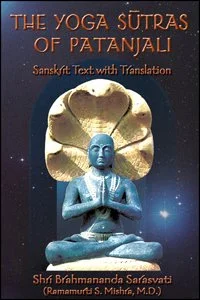
Patanjali gave us the Yoga Sutras. Who is Patanjali? A rishi. The Sutras: Indelible.
Teaching yoga to me is all about making the indelible even more unforgettable. Teaching is a marker in each of us who learn from and study with a lineage to continue the lineage by simply being in the vibration of the Sutras.
As Guruji said “The vibration of the sutras are within you.”
He meant everyone when he said “you,” but I tended to take these messages very personally. And so if the mind forgets, I chant the sutras again and again so that it remembers.
The 8 limbs of Yoga form the basis of Yoga Illumined teacher training and studies. They are just as helpful to the novice as they are to the advanced practitioner of yoga.
The Sutras can be a bit of a puzzle for the mind to try to figure out as they are not whiten nor orally transmitted for the mind. They are transmitting meaning and vibration into the one who is working to articulate the sounds of each Sutra to unpack them. They themselves are transformative in that the attempt to articulate them bestows wisdom upon the body and being when uttered.
In Yoga Illumined we practice and unpack the Yoga Sutras and the 8 limbs of Yoga so that each sutra can unfurl a universe of blessings upon each and every practitioner.
What are the 8 limbs of Yoga?
Yama - the first limb establishes the Yoga practitioner into the underlying precepts of the practice. Patanjali packed giant gobs of meaning in a word - sutra is related to the word ‘suture’ in English.
Yama constitutes 5 basic principles to guide one’s life and practice:
ahimsa - we can call this non-violence but the absence of violence and the basic understanding of not killing nor harming another sentient being is too limiting of a definition. Violence and peaceful non-violent protests are markers of resistances led by Gandhi and Martin Luther King, Jr — but when you look at why their peaceful movements worked it is because they had such a bedrock of loving-kindness and devotion to God and humanity.
satya - truth that does not hurt. Without ahimsa preceding the practice of truth then the mind can be clouded with extremes of emotions such as judgment, fear, hatred, anger, jealousy and more. We hear the phrase “Truth hurts,” but according to this no, truth without ahimsa hurts but otherwise is generous and wise.
asteya - non-stealing — in the sense where without jealousy or covetousness a yogi sees that each one of us is remarkably gifted. The practice of asteya is that of boundaries: giving each and all sentient beings their due respect and place in the world. When we allow too much negativity into our fields, we allow the “thief of joy” to steal our natural happiness. The practice of asteya allows our better angels to guide us.
brahmacharya - this is the ability to self-refrain from extremism of any kind. The ability to self-regulate emotionally and mentally, brahmacharya aims to keep the yogi and Yogini from over-indulging in any pleasure or pain, memory, circumstance or relationship
aparigraha non-attachment in the most positive way to anything and anyone. Non-possessiveness meaning no matter what anyone has there is an understanding that all does not belong to you. This is surrender at its most magical. It is the opposite of greed and extreme fixation. Ted Lasso famously said “Be like a goldfish.” A goldfish has no memory of slights nor insults. Healthy non-attachment is seeing both praise and insults as passing clouds in the sky.
2. Niyama - the second limb of yoga tells us how to put Yama into action
shaucha - cleanliness and purity of one’s surroundings but more importantly of one’s own body and mind. This can seem as if one can’t be messy nor dirty - ultimately shaucha does not simply imply staying bleached in anti-fungal and antiseptic cleaning products. It means making an effort at all times to release and clear out all that does not keep one in joy
santosha - contentment is an inward nourishment that doesn’t argue with what is. This is divine contentment at life’s ups, downs, mysteries and unfolding.
tapaha - the heat of discipline - even the root of the word discipline in English is “disciple.” What I love about the root of the word “tapa” in Sanskrit is “to cook or heat up” means that a daily discipline of yoga will cook you out of all difficulties and negative karmas
svadhyaya - Self-study and study of scriptures and wisdom texts. Without self-study - all scriptures have no meaning. All true scriptures such as the Yoga Sutras of Patanjali lead you back to your true Self.
Ishvara - pranidhani -the reference to God here is to remind the practitioner to focus on something bigger than the ego, mind and emotions to guide one’s life and practices. Remember that there is a Universal, supreme consciousness beyond the body and the mind that helps all beings
3. Asana - the 3rd limb of yoga means “comfortable seat” and led the way to Hatha Yoga and all of the branches of physical movements attributed to yoga
4. Pranayama - Breathwork of which there are many to help body self-regulate, awaken and achieve homeostasis
5. Pratyahara - the ability for the Yogi or Yogini to withdraw from identifying with the 5 senses. We are mostly unconscious at how provocative each of the 5 senses are. The 5th limb of yoga aims to put each sense in its place.
6. Dharana - The ability for your focus to remain on that which is good and empowering. In yoga this is the ability to focus on the divine rather than the mundane. These practices are about steady and dynamic focus that keep the mind from taking over the natural bliss of the Self.
7. Dhyana - This is the state of continuous meditation. Meditative states are many and layered in yoga and all wisdom traditions.
8. Samadhi - Patanjali describes many levels of samadhi which is freedom itself. This is the state of being absolutely at one with the Source of all that is that there is no doubt as to who you are: not this body nor this mind.
Yoga Illumined focuses on the study and application of all 8 limbs of yoga. There are many practices in each limb of yoga that sum up the totality of transformation, from individual consciousness to Supreme bliss.